
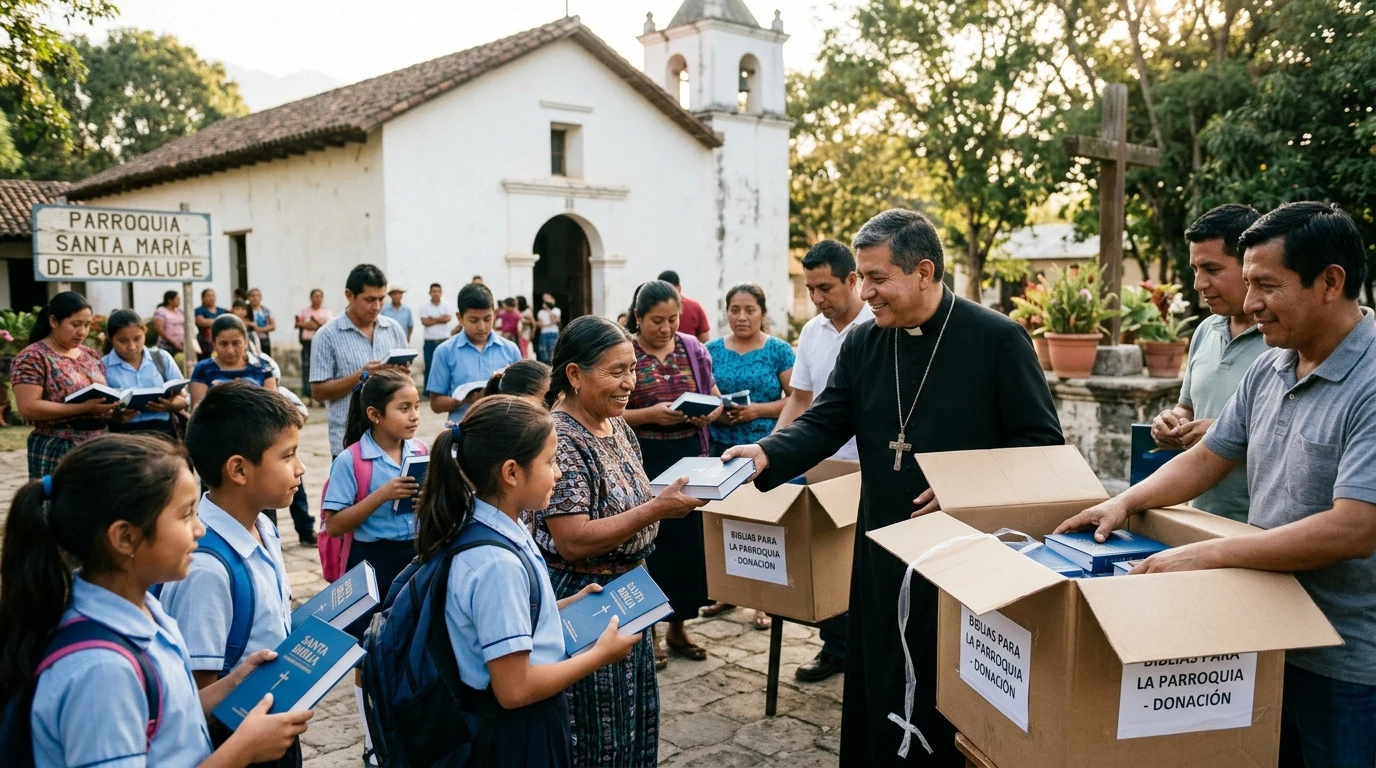
We Provide Bibles Worldwide — Global Church Outreach
✨ This article was AI edited. Editorial responsibility: Guardian Church Goods.
Produced with AI. This article was artificially generated. Editorial responsibility: Guardian Church Goods.
We provide Bibles worldwide represents the dedicated mission of church goods suppliers, missionary apostolates, and parish benefactors who manufacture, sponsor, and distribute sacred scriptures, altar missals, and catechetical Bibles to under-resourced dioceses, rural chapels, and developing Christian communities across the globe.
The living Word of God is the bedrock of Christian discipleship, sacramental life, and liturgical worship. In Saint Paul’s Second Letter to Timothy, the Apostle reminds the Church: “All scripture is inspired by God and profitable for teaching, for reproof, for correction, and for training in righteousness, that the man of God may be complete, equipped for every good work” (2 Timothy 3:16–17). However, across vast swathes of the developing world—from remote mountain villages in the Andes to impoverished rural outstations in Central Africa and Oceania—millions of faithful Christians thirst for a personal or communal copy of sacred scripture that they can read, study, and pray.
When Catholic and Christian organizations state “we provide bibles worldwide,” it represents far more than an aspirational motto; it is an active, complex logistical ministry requiring international partnerships, rigorous biblical translation standards, durable book manufacturing, and dedicated pastoral distribution networks. This comprehensive guide examines how worldwide scripture provision operates, the specific biblical needs of global parishes, logistical hurdles, quality manufacturing benchmarks, and how faithful communities can participate directly in this vital global apostolate.
Contents
The Spiritual & Pastoral Realities of Global Parochial Needs
Pastoral visitation across developing dioceses reveals profound challenges that are largely unfamiliar to Western church communities:
- Parish Sharing Ratios: In many impoverished rural parishes, a single Bible must serve an entire village community of several hundred people. During Sunday liturgies or midweek prayer services, the physical Bible is carefully brought forth from a protective locked box, read aloud by the village catechist, and returned to safekeeping. Personal scripture ownership remains a rare privilege.
- Sacramental Preparation Deprivation: Children and youth preparing for the Sacraments of Christian Initiation (First Holy Communion and Confirmation) frequently study catechetical lessons purely through oral memorization, lacking access to an illustrated Gospel or children’s Catholic Bible to anchor their understanding of salvation history.
- Seminary & Formation Deficits: In newly erected mission dioceses, seminaries and convent formation houses frequently possess severely understocked libraries. Future priests and religious sisters often share dogmatics texts and exegetical study Bibles in shifts, creating significant bottlenecks in academic preparation.
- The Infiltration of Prosperity Cults: When orthodox, full Catholic and Christian Bibles are unavailable in local vernacular languages, counterfeit theological sects and syncretic prosperity movements aggressively step into the void, distributing misleading literature that distorts the Gospel. Providing authentic, authorized Catholic Bibles is the most effective safeguard of apostolic truth.
Core Distribution Channels: Delivering the Word to the Nations
Providing Bibles worldwide requires multi-tiered logistical channels that operate seamlessly from high-speed printing facilities to remote rural dirt roads:
1. Institutional Diocesan Consignments
The most stable, secure method of large-scale distribution is direct consignment to national Catholic Bishops’ Conferences or diocesan chanceries. By working under the direct ecclesiastical authority of local bishops, containerized shipments containing 10,000 to 25,000 Bibles clear international customs without import duties, entering diocesan distribution warehouses where parish priests collect allocated quotas for their respective rural parishes.
2. Religious Orders & Missionary Congregations
Global missionary congregations—such as the Society of the Divine Word (SVD), the Salesians of Don Bosco, the Redemptorists, and the Missionaries of Charity—operate extensive humanitarian and pastoral networks in the most marginalized regions of the earth. Partnering directly with these religious orders ensures that Bibles reach prisons, refugee camps, leprosaria, and remote tribal outposts that lack formal diocesan infrastructure.
3. Specialized Catholic Publishing Foundations
Institutions such as Paulines Publications Africa (Daughters of St. Paul), the Catholic Biblical Federation, and Claretian Communications maintain regional publishing hubs. Printing Bibles locally in regional hubs reduces transatlantic maritime shipping costs by up to 60%, drastically shortens delivery timelines, and supports local Christian printing apprenticeships.
Comparison Matrix: Worldwide Scripture Provision Categories
| Provision Category | Primary Recipient | Physical Specifications | Pastoral Impact |
|---|---|---|---|
| Altar Proclamation Bibles | Parish sanctuaries, mission altars | Large folio/quarto, genuine leather, gold foil, 14pt+ bold text, ribbon markers | Dignifies the Liturgy of the Word, inspires reverent awe in the assembly |
| Communal Pew Bibles | Church pews, parish hall prayer groups | Hardcover buckram, smyth-sewn, tear-resistant 32 GSM paper | Allows entire congregation to follow Mass readings and study communally |
| Catechist Vernacular Bibles | Village catechists, lay leaders | Flexible durable vinyl, comprehensive footnotes, doctrinal cross-references | Equips grassroots leaders to lead orthodoxy-anchored faith formation |
| Illustrated Children’s Bibles | Primary students, illiterate catechumens | Color illustrations, durable stitched binding, simplified text | Fosters multi-generational family reading and rapid literacy |
Durable Manufacturing Standards for Global Environments
Books destined for international mission environments must endure severe environmental stresses. When providing Bibles worldwide, publishers enforce rigorous engineering criteria:
- Smyth-Sewn Signatures vs. Adhesive Glues: Inexpensive trade paperbacks use “perfect binding” (adhesive glue along trimmed page edges). In tropical climates, standard adhesives melt in the summer heat and become brittle in seasonal dry spells, causing pages to disintegrate within months. Smyth-sewn Bibles stitch each folded signature with high-tensile thread before encasing it in cloth, ensuring the book opens flat and lasts for decades.
- Opaque, Non-Glare Paper Stock: Thin Bible paper (28 GSM or lower) often suffers from severe “ghosting” (bleed-through of text from the reverse page). Mission Bibles utilize highly opaque 32–36 GSM paper treated with titanium dioxide opacity agents, ensuring legible reading even under dim kerosene lamp light or village solar lanterns.
- Moisture and Mold Resistance: Cloth covers are treated with water-resistant acrylic polymer coatings, and text blocks are stored in desiccant-controlled packing to prevent mold spores from taking root during transoceanic shipping.
Frequently Asked Questions: Providing Bibles Worldwide
Q1: How can individual parishes get involved in global Bible sponsorship?
A1: Parishes can establish an annual “Scripture Solidarity Sunday,” where special collections are dedicated to sponsoring a designated quantity of Bibles for a specific mission diocese. Parishes often partner with reputable Catholic missionary foundations (such as Aid to the Church in Need, Pontifical Mission Societies, or Cross Catholic Outreach) to ensure 100% transparent delivery to vetted recipient communities.
Q2: Why are deuterocanonical books essential in Bibles provided to Catholic missions?
A2: The Catholic biblical canon definitively ratified at the Council of Rome (382 AD), Council of Florence (1442 AD), and Council of Trent (1546 AD) contains 73 books. The seven deuterocanonical books (Tobit, Judith, 1 and 2 Maccabees, Wisdom, Sirach, Baruch, and additions to Esther and Daniel) provide foundational scriptural support for core Catholic doctrines—including purgatory, the intercession of the saints, and the sacrificial priesthood. Providing Bibles missing these books deprives new converts of essential sacred revelation.
Q3: How does worldwide Bible provision impact adult literacy in rural areas?
A3: In countless rural villages across Africa and Latin America, the Bible is the only printed book that exists in the local mother tongue. Adult literacy classes organized by Catholic parishes routinely utilize the Gospels as their primary reading textbook. Learning to read using the Word of God simultaneously imparts linguistic literacy and spiritual salvation.
Published by GuardianChurchGoods.com — Dedicated to international scripture outreach, church goods logistics, Catholic missions, and biblical formation.
Get our latest guides, news, and insights highlighted in your Google Search & AI Overviews.



 YOUR WEALTH MANIFESTATION BEGINS IN 3...2...1...