
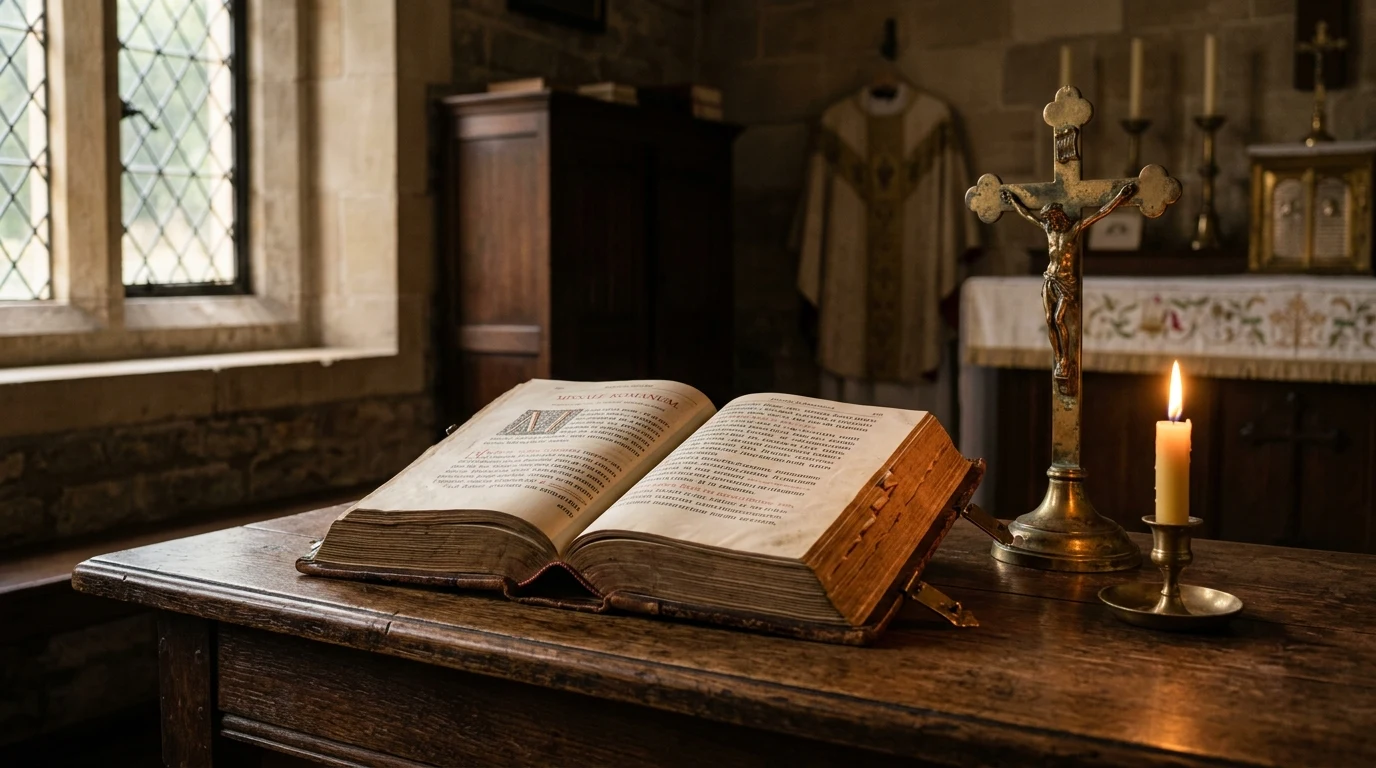
How to Reverently Dispose of Old Bible Pages and Sacred Texts: Catholic Tradition and Guidelines
✨ This article was AI edited. Editorial responsibility: Guardian Church Goods.
Produced with AI. This article was artificially generated. Editorial responsibility: Guardian Church Goods.
Canonical Summary: Discarding worn, torn, or damaged Holy Scriptures requires adherence to sacred Catholic tradition. Unlike ordinary printed secular literature, pages bearing the Word of God or sacred blessings cannot be consigned to ordinary municipal waste or standard commercial recycling bins. Under Catholic liturgical customs, pious books, damaged Bibles, and worn devotional items that have reached the end of their usable life must be reverently returned to the earth through either devotional burning or dignified burial in consecrated ground.
Contents
- The Theological Distinction Between Sacred and Secular Texts
- Evaluating Usability: Restoration vs. Retirement
- The Two Canonical Methods of Reverent Disposition
- Handling Non-Biodegradable Covers and Modern Bindings
- Can a Catholic Parish Assist with Bible Disposal?
- Comparative Guidelines: Discarding Different Religious Items
- Frequently Asked Questions About Discarding Old Bible Pages
- Conclusion: Honoring the Word Through Its Final Moments
What Is the Proper Catholic Protocol for Discarding Old Bible Pages?
In Catholic canonical tradition and customary piety, damaged Holy Bibles, worn liturgical texts, and discarded scripture leaves must be retired through reverent disposition rather than profane disposal. The two approved, reverent methods are: (1) Pious Burning, in which the printed sacred pages are completely incinerated and the resulting ashes buried in an undisturbed flower bed, garden, or church sacrarium; or (2) Consecrated Burial, where the sacred volume is wrapped in clean natural cloth, placed in a biodegradable container, and buried at least six feet deep where foot traffic will not trample the soil.
The Theological Distinction Between Sacred and Secular Texts
In modern consumer culture, paper products are treated as ephemeral and discarded without hesitation. However, sacred scripture occupies an elevated sacramental space within Christian theology. The Catholic Church venerates the divine Scriptures just as she venerates the Body of the Lord (Dei Verbum 21). When an edition of Sacred Scripture—whether an antique family heirloom, a worn parish Missal, or an everyday pocket New Testament—becomes so decrepit that loose leaves crumble or the binding disintegrates beyond restoration, its physical medium may expire, but the reverence owed to the divine word remains perpetual.
Furthermore, many household Bibles have received a formal priestly blessing. According to standard Catholic pastoral practice, once an object receives a sacred blessing (constitutive blessing), it is dedicated permanently to divine worship and sacred devotion. Consequently, throwing blessed pages into the household trash is considered an act of desecration and irreverence.
Evaluating Usability: Restoration vs. Retirement
Before proceeding with reverent disposition, assess whether the Bible can still be saved or repurposed. In many instances, parish communities or Catholic bookbinders can extend the life of an aging text:
- Professional Rebinding: If the text block remains legible and intact, a qualified bookbinder can craft a new leather or cloth binding, preserving the Bible for future generations.
- Parish School or CCD Use: Bibles missing a flyleaf or having a broken spine can frequently serve as classroom reference copies or study aids in Christian formation classes.
- Missionary Donation: While severely dilapidated volumes should not be shipped abroad, lightly worn or repaired study Bibles can be distributed through reputable prison ministries or domestic apostolates.
- Sacred Art Repurposing: Isolated illuminated pages or antique engravings may sometimes be respectfully framed for religious education rooms, family altars, or parish hall galleries.
The Two Canonical Methods of Reverent Disposition
| Method | Step-by-Step Procedure | Crucial Precautions | Recommended Context |
|---|---|---|---|
| Devotional Burning | 1. Prepare an enclosed outdoor fire pit or hearth. 2. Recite Psalm 119 or a quiet prayer of thanksgiving. 3. Gently separate dense signatures so leaves ignite fully. 4. Allow total reduction to white ash. 5. Gather all ashes and bury them in consecrated or undisturbed earth. | Never allow smoke or burning pages to scatter in the wind. Do not burn synthetic plastic covers; remove non-biodegradable vinyl covers before ignition. | Parish Easter fire preparations, autumn cleanings, or private domestic gardens with proper hearth safety. |
| Earth Burial | 1. Wrap the volume or loose pages in unbleached cotton, linen, or clean paper. 2. Place inside a simple biodegradable wooden or cardboard box. 3. Dig a hole at least 2 to 3 feet deep in a quiet, protected location. 4. Commend the pages to the earth with the Sign of the Cross. 5. Refill and restore the turf. | Choose an area free from daily foot traffic, such as beneath a decorative garden statue of Our Lady, near a church sacristy garden, or in a private prayer corner. | Heavy leather-bound family Bibles, large parish lectionaries, or residential settings where outdoor burning is prohibited by municipal fire codes. |
Handling Non-Biodegradable Covers and Modern Bindings
A frequent challenge with modern devotional publications and inexpensive study Bibles is the presence of synthetic materials such as polyurethane faux leather (“leatherette”), plastic ribbon markers, metal wire bindings, or plasticized gloss dust jackets. When preparing old pages for discard via reverent burning, these materials must not be burned, as toxic fumes and plastic residue contradict the solemnity of the action and violate environmental stewardship.
Carefully disassemble the volume beforehand. Use a sharp craft blade to sever the stitching and paper text block from the synthetic casing. Dispose of the synthetic plastic cover in standard municipal recycling or waste, reserving the pure paper pages, cotton ribbon, and organic thread for devotional burning or dignified burial.
Can a Catholic Parish Assist with Bible Disposal?
Many Catholic parishes have designated facilities and annual rituals specifically designed for retiring sacred goods. If an individual lacks a private garden, yard, or fire hearth, contacting the parish office or sacristan is an excellent pastoral alternative.
Sacristies are typically equipped with a sacrarium—a special sink draining directly into the earth rather than the municipal sewer line—used for washing sacred vessels. In addition, many parishes maintain an undisturbed ground repository near the sacristy for burying holy water residue, blessed palm ashes, and worn liturgical texts. Parishes also customarily collect old blessed palms and holy texts prior to Ash Wednesday to prepare liturgical ashes, making parish cooperation both simple and spiritually enriching.
Comparative Guidelines: Discarding Different Religious Items
| Item Category | Blessed Status | Canonical Guidance | Forbidden Actions |
|---|---|---|---|
| Holy Bibles & Lectionaries | Inherently Sacred / Blessed | Burn to complete ash and bury ash, or bury directly in biodegradable wrapping. | Never place in household trash or mixed recycling. |
| Blessed Rosaries & Crucifixes | Explicitly Blessed | Metal components should be melted down or buried deeply; wood/cord components burned. | Do not sell for profit or discard in general refuse. |
| Parish Bulletins & Flyers | Unblessed Print Material | Standard clean paper recycling is permitted; burning optional if scripture quotes are prominent. | Avoid using for frivolous or disrespectful utility. |
| Holy Cards & Icons | Often Blessed | Laminated cards can be cleanly buried; paper cards burned with prayer. | Never discard carelessly in municipal landfills. |
Frequently Asked Questions About Discarding Old Bible Pages
Can I put an old Bible in the paper recycling bin?
No. Standard municipal recycling facilities commingle recyclable paper with soiled refuse, industrial scrap, and commercial advertising waste. The pulping and chemical reclaiming process subjects the sacred text to indignity. The Church asks that faithful Catholics reserve paper recycling for unblessed, non-liturgical periodicals and utilize burning or burial for Holy Scriptures.
What prayer should be said when retiring or burying a Bible?
While no rigid liturgical formula is strictly mandated for private individuals, reciting Psalm 119 (“Your word is a lamp to my feet and a light to my path”), the Lord’s Prayer, or the Apostles’ Creed is customary. A heartfelt prayer giving thanks for the spiritual nourishment received through the text is appropriate.
What if the Bible is a Protestant translation rather than Catholic?
Reverence for the Word of God transcends confessional boundaries. While Protestant editions may lack the deuterocanonical books (such as Tobit, Judith, and Wisdom), they still contain the inspired apostolic and prophetic Scriptures. Faithful Christians should treat any volume bearing the divine Scriptures with identical dignity, utilizing the same pious burial or burning procedures.
Where can I donate Bibles that are still legible and intact?
If your old Bibles are merely worn but complete, consider donating them to Catholic prison outreach programs, nursing homes, or community apostolates. Explore our guide on providing Bibles to churches worldwide and our directory of rare and antique Bible preservation.
Conclusion: Honoring the Word Through Its Final Moments
The reverent disposal of sacred text reminds us that our faith is deeply incarnational. The tangible objects we use in worship—our altars, crucifixes, rosaries, and printed Bibles—connect our sensory human experience with transcendent eternal truth. By taking the time to bury or burn worn Bible pages with deliberate prayer, the faithful witness to the sacredness of God’s revelation and cultivate a spirit of piety in the domestic church.
Get our latest guides, news, and insights highlighted in your Google Search & AI Overviews.


 WAIT! YOUR DIVINE CONNECTION IS BLOCKED